
4 Key Considerations for Senior Sports Spaces
Slip Resistance After Wet Mopping
Activity rooms, corridors, and rehabilitation areas often face high cleaning frequencies; product selection should consider wet friction, drainage, and edge transitions.
Gait Stability
Senior sports flooring must not focus solely on softness; excessive softness can affect the stability of walkers, canes, and seniors when turning.
Low-Impact Cushioning
Stretching, Tai Chi, rehabilitative walking, and balance training require a certain level of cushioning to help reduce the risk of impact on ankles, knees, and falls.
Wheelchair Traffic
Spaces in communities and elder care institutions are often shared with wheelchairs, nursing beds, and meal carts. The flooring must feature low height, prevent wheels from getting stuck, and be easy to maintain.
Quick Selection by Activity Type
| Scenario | Flooring Focus | Recommended Products | Description |
|---|---|---|---|
| Community Fitness Corner / Activity Room | Slip Resistance, Wear Resistance, Stable Foot Feel | S2 Xingmang / S3 Xingyao | Suitable for light fitness, stretching, board games/cards, and daily activities. |
| Senior Pickleball Experience Area | Slip Resistance & Cushioning, Clear Boundaries, Low Glare | S3 Xingyao / Quantum Stack | The standard court inner line is 20 × 44 ft (approximately 6.10 × 13.41 m). Senior experience classes require additional safety cushioning and seating areas based on the site conditions. |
| Tai Chi / Baduanjin / Stretching | Low Glare, Standing Stability, Flat Edges | S2 Xingmang / S3 Xingyao | Suitable for morning exercises, activity room classes, and daily training in nursing homes, with a focus on avoiding excessive softness and glare/reflection. |
| Gateball / Bocce | Flatness, Directional Recognition, Low Resistance | S3 Xingyao / Quantum Stack | Suitable for low-intensity competition and social activities. It is recommended to set aside waiting areas and rest seating. |
| Roliball / Table Tennis | Turning Stability, Wear Resistance, Cushioning | S3 Xingyao / Fall-cushion System | Suitable for group classes and indoor activity areas, with a focus on verifying turning, racket swinging, and boundary cushioning. |
| Square Dancing / Rhythmic Aerobics | Slip Resistance, Sound Absorption, Balanced Foot Feel | S2 Xingmang / S3 Xingyao | Suitable for community multi-function halls. Control of audio volume, occupancy density, and entry/exit circulation is required. |
| Community Light Sports / Senior Activity Area | Slip Resistance & Cushioning, Low Glare, Clear Circulation | S3 Xingyao / Fall-cushion System | Suitable for community classes, nursing home activities, and family-accompanied light sports. |
| Rehabilitation Training Area | Low-Impact Cushioning, Walker Stability | S3 Xingyao / Quantum Stack | Suitable for gait training, balance training, and wheelchair-assisted traffic. |
| Nursing Home Public Activity Area | Wheelchairs & Nursing Beds, Cleaning & Maintenance | S3 Xingyao / Fall-cushion System | Balancing traffic stability, slip resistance, and low-height cushioning. |
| High-End Wellness & Senior Care Exhibition Area | Structural Support, Exhibition Quality Texture | Quantum Stack | True three-layer structure, suitable for showroom spaces and high-end public activity areas. |
Zoning Sports Spaces According to 1A / 2A / 3A
Senior sports flooring is part of the age-friendly fall-mitigating flooring in activity scenarios. For projects, it is not recommended to select materials solely based on the 'sports type.' Instead, configure wet areas, main activity areas, traffic corridors, and key buffer zones separately.
1A: Wet Areas and High-Frequency Cleaning Zones
L1 Bathroom Mat, Xingji Half Anti-slip Mat, and Xingji Full Anti-slip Mat are used beside showers, near washbasins, at vestibules, and in wet auxiliary areas around activity rooms. R10 is used specifically for the corresponding testing descriptions of the Xingji Full Anti-slip Mat.
2A: Main Activity and Public Passage Areas
S3 Xingyao is used for senior pickleball experiences, community fitness corners, multi-functional activity rooms, common areas in senior care facilities, and shared routes that may be used by wheelchairs, walkers, and nursing beds.
3A: Key Cushioning and Composite Systems
S1 Beijixing and Fall-cushion System are used for bedside areas, rehabilitation training, key turning zones, or PVC/wood floor composite top-layer projects. Age, bone density, and care levels are used for risk zoning and do not alter product ratings.
Senior Light Sports: Pickleball is suitable for community activities
Pickleball has a friendly pace and high interactivity, making many seniors willing to participate in introductory classes and doubles play. Community light sports programs should simultaneously consider activity intensity, floor slip resistance, low-height cushioning, low glare, traffic flow management, resting area setups, and care coordination. The AnchorCare page focuses on discussing risk management from the perspective of age-friendly flooring materials.
Clear Visibility
Activity boundaries, waiting areas, and resting areas should have high contrast without being glaring, reducing hesitation when identifying traffic flows.
Stable Footing
Slip resistance must be considered after cleaning, after rain, and in indoor humid environments, avoiding surfaces with strong reflection or excessive slickness.
Cushioned Fall Impact
Senior sports place higher emphasis on underfoot feel and cushioning; the flooring must balance sports stability and fall impact mitigation.
Smooth Movement
Entrances, barriers, resting benches, and hydration stations must not crowd run-back spaces, and transition edges must be level.
Standard pickleball court boundary lines are 20 × 44 ft (approx. 6.10 × 13.41 m); the non-volley zone extends 7 ft (approx. 2.13 m) from both sides of the net. Net height is approx. 36 in at the posts and approx. 34 in at the center.
A format of 15-minute warm-up + 30-minute coaching + 15-minute doubles experience can be used, starting with movement and safe hitting before transitioning to match play.
Light sports activities do not equate to zero exercise risk. Participants should warm up, wear appropriate athletic shoes, and participate according to their physical condition; flooring products cannot guarantee the prevention of falls, injuries, or fractures.
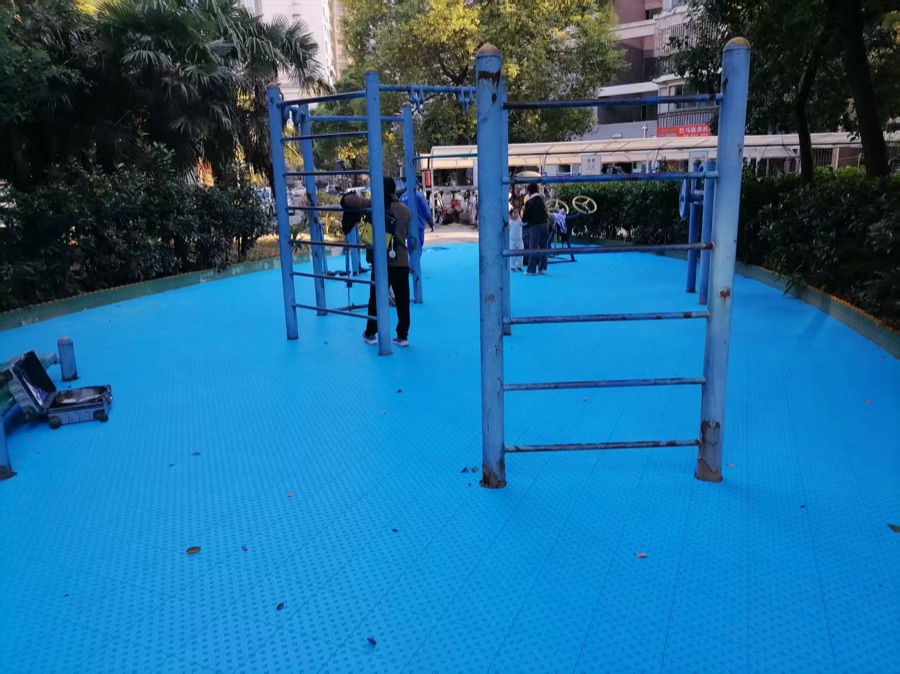
Senior Care Community Pickleball and Light Sports Activity Areas
Such spaces are suitable for zoned design combined with senior pickleball experiences, community classes, daily activities, and companionship from family and friends. The flooring focuses on slip resistance, low-height cushioning, low glare, clear traffic flows, and cleaning maintenance; specific product configurations should be evaluated based on activity content, wheelchair routes, and site conditions.
The project focus is not on making the activity area 'softer', but on achieving a balance among stable support, slip resistance, low glare, traffic flow identification, daily maintenance, and long-term use.
More Sports Types Suitable for Seniors
Different sports have varying requirements for the ground. AnchorCare recommends first zoning the floor based on activity intensity, turning frequency, equipment usage, and wheelchair/walker traffic, and then determining the product combinations and edging methods.
Tai Chi / Baduanjin
With slow movements and frequent pauses, the floor must feature low glare, stable footing, and level edges to avoid a floating sensation underfoot.
Gateball / Bocce
Emphasizes flatness and direction orientation, suitable for low-intensity social activities; installing waiting areas and rest chairs is recommended.
Roliball / Table Tennis
Involving turning and racket-swinging movements, the flooring must balance slip resistance, wear resistance, low-height cushioning, and boundary identification.
Brisk Walking / Rehabilitation Walking
Suitable for corridors, rehabilitation trails, and activity room loops, with a focus on seamless installation, low height differences, and walker stability.
Square Dancing / Rhythmic Aerobics
With high occupancy and intense rhythms, factors such as slip resistance, sound absorption, balanced underfoot feel, exit/entrance traffic diversion, and cleaning maintenance must be considered.
Seated Resistance Bands / Light Equipment
Suitable for adult day care and rehabilitation sessions, requiring verification of chair leg indentation, equipment impact points, and wheelchair passage.
Why Consider Both Stability and Cushioning
Senior exercise spaces should not be simplisticly viewed as safer the softer they are. Flooring suitable for seniors needs to strike a balance among standing, turning, walker contact points, wheelchair rolling, and post-fall impact.
Surface Must Be Stable
The surface needs to provide clear underfoot feel and friction feedback, supporting standing, starting, turning, low-intensity racket swings, and walker contact points, while avoiding a floating sensation, dragging, or wheel jamming.
Base Layer Must Provide Cushioning
In the event of a fall, a reasonable low-height cushioning layer can help mitigate floor impact, but it cannot replace handrails, lighting, footwear, warm-ups, rehabilitation assessments, and care management.
Transitions Must Be Flat
Height differences at entrances, wall edges, equipment areas, resting zones, and connections to the original floor must be processed in advance to prevent cushioning materials from becoming new tripping hazards.
Test Documentation and Project Support
Testing Corresponds to Specific Products
Public information on the official website covers SGS, REACH, GB 18883, ISO 9001, impact cushioning, and slip resistance. When officially cited, details should correspond item-by-item to report sample names, product models, and conclusions, without cross-applying across models.
Information Packages Can Be Publicly Forwarded
Product catalogs, classification descriptions, selection lists, and project communication materials can be used as public data portals; quotations, stamped documents, and original reports are still provided based on the version confirmed by the project consultant.
B2B Project Collaboration
For communication with senior care real estate, nursing homes, community age-friendly renovations, and design institutes, anonymized layout recommendations, sample lists, and information packages can be prepared based on photos, floor plans, traffic flows, and user demographics.
Recommended Product Combinations
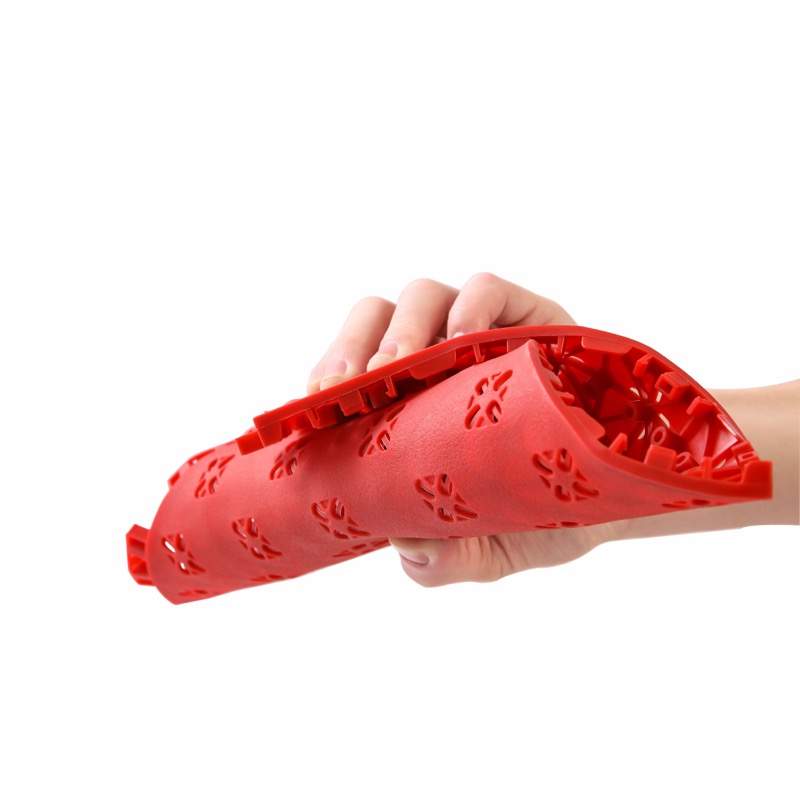
S1 Beijixing
3A key cushioning products, suitable for bedside, rehabilitation turning, and nighttime rising routes.
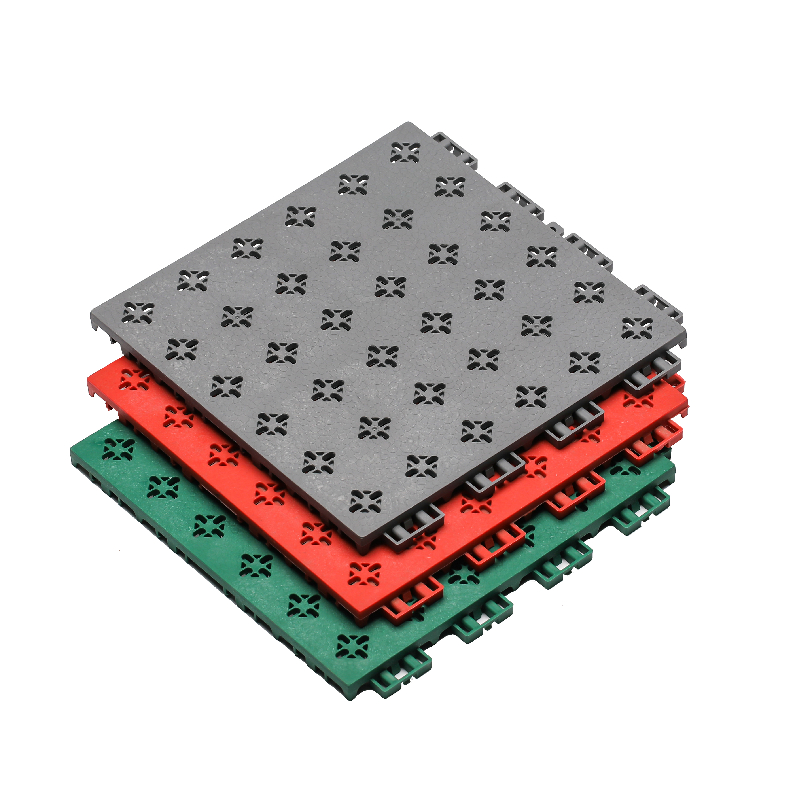
S2 Xingmang Protective
Soft rubber flat sheets, suitable for activity rooms, training areas, and flexible cushioning routes.
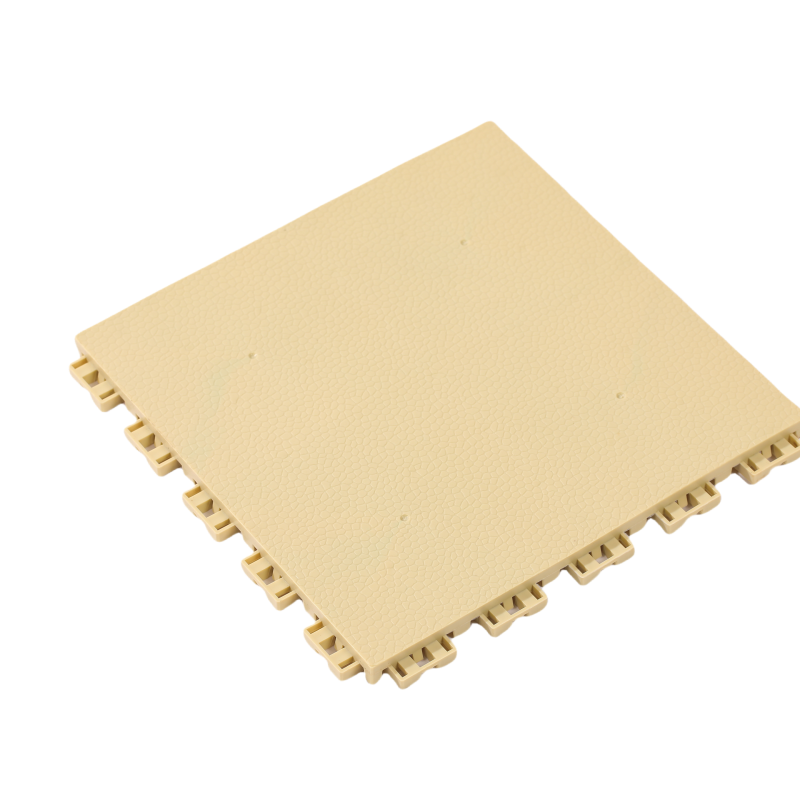
S3 Xingyao
Universal institutional model, balancing slip resistance, cushioning, and passage of wheelchairs and nursing beds.
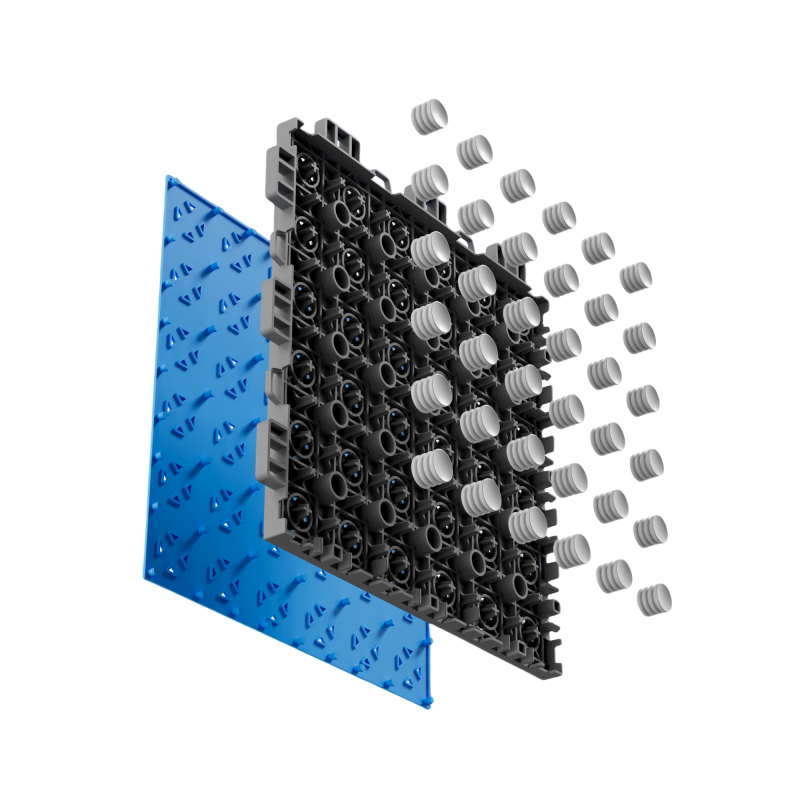
Quantum Stack
Premium three-layer structure, suitable for senior care exhibition areas and public activity areas.
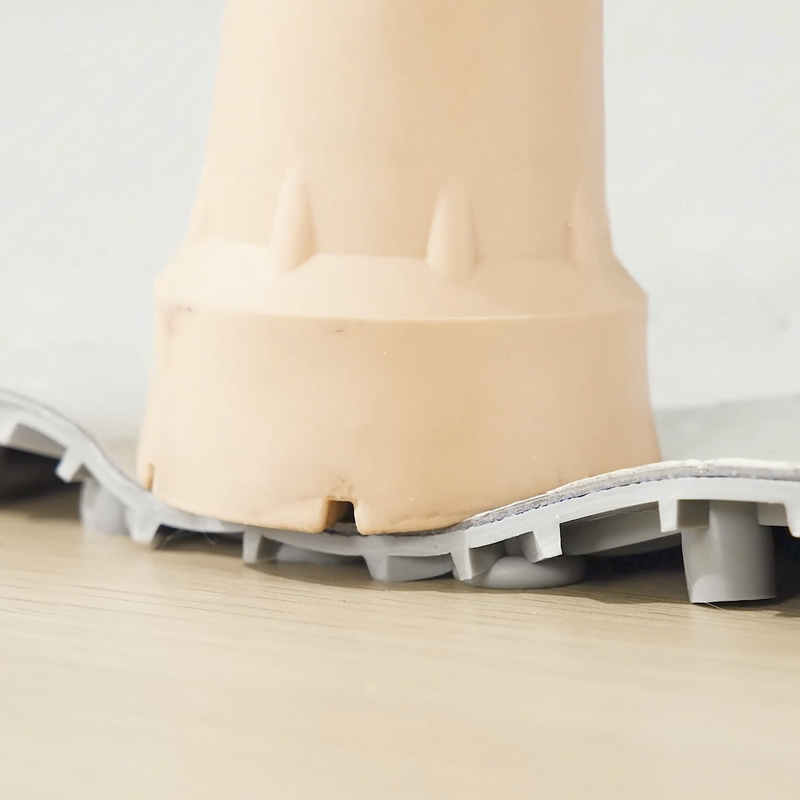
Fall-cushion System
3A composite surface solution, used for key fall-risk zones and renovation of existing floors.
Design Reminders
Senior exercise spaces need to balance cushioning and stability, especially for turning, starting, walker contact points, and wheelchair passage.
Height differences at entrances, equipment edges, wall edges, and transition zones must be controlled to avoid creating new tripping hazards.
Cleaning frequencies, disinfectants, and drainage conditions vary by location; we recommend confirming samples and maintenance plans on a project-by-project basis.
Need product selection for senior exercise areas?
Provide the site area, user profile, whether wheelchairs/walkers are used, activity types, and budget range, and we will provide product combination recommendations tailored to the scenario.